

 English
 Pусский


Article Overview: This article explains the evolution of packaging machinery in the paper cup industry—from standalone packing units to fully integrated production lines. It covers the technologies driving this shift, the operational benefits for manufacturers, and key considerations for technical buyers and operations leaders evaluating automation upgrades. The focus is on informational discovery, helping readers understand the underlying principles and practical implications of line integration without promoting any specific brand.
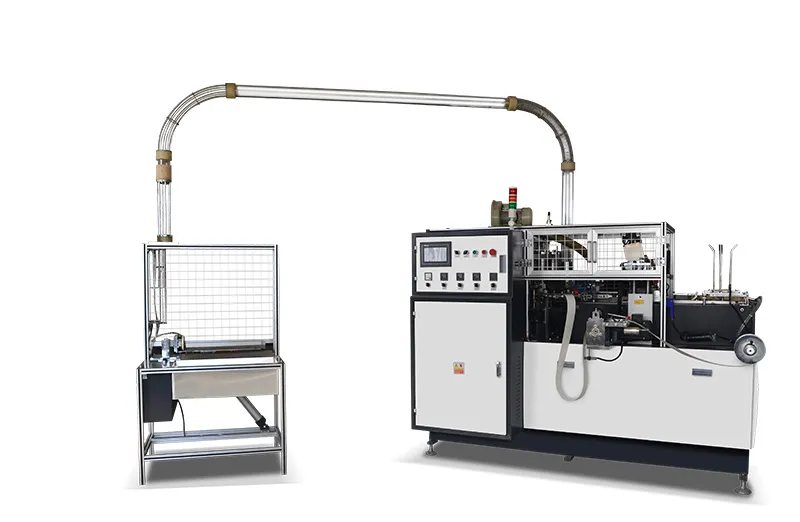
The Evolution of Packaging Machinery in Paper Cup Production
Historically, paper cup manufacturing and packaging were separate stages. Cup forming machines produced finished cups, which were then manually or semi-automatically fed into a packaging machine for bagging or wrapping. This approach introduced bottlenecks, inconsistent output, and higher labor costs. The separation also increased the risk of contamination and product damage during transfer.
Over the past decade, packaging machinery has evolved from simple bagging units to complex systems that integrate directly with cup formers. The trend is toward “single-line” or “integrated” solutions where forming, counting, stacking, and packing are synchronized. For example, a modern packing machine can receive cups directly from a forming machine via a conveyor, count them into predetermined quantities, and wrap them in film—all without manual intervention. This integration reduces cycle time and eliminates intermediate storage. It also improves hygiene and product handling, as cups spend less time exposed to the environment. For technical buyers, understanding this evolution is critical when planning capacity expansions or new production lines.
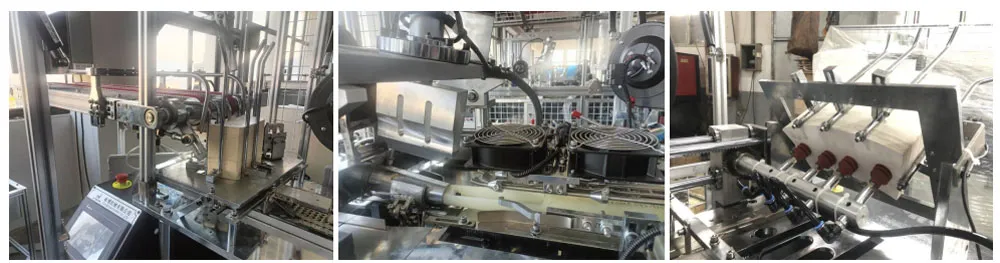
Key Technologies Driving Line Integration
Several technological advances have made line integration practical and cost-effective for mid-to-high-volume paper cup production.
Servo-Driven Motion Control: Independent motor controls on each station allow for precise synchronization. A four-station horizontal packaging machine, for instance, uses separate servo motors for film feeding, bag forming, sealing, and cutting. This independence means the machine can adjust to different cup sizes and film types quickly—a feature critical for facilities that run multiple product SKUs.
Multi-Function Film Handling: Modern packaging machinery integrates film feeding, bag making, sealing, and labeling into one unit. This consolidation reduces floor space and simplifies maintenance. Many suppliers now offer combined modules that can be stacked or arranged side-by-side.
PLC-Based Control Logic: Programmable logic controllers (PLCs) allow operators to store recipes for different cup types, film specifications, and packing patterns. Changeovers that once took an hour can now be done in minutes via a touchscreen interface. For operations leaders, this translates directly to higher overall equipment effectiveness (OEE). These technologies are not limited to new installations. Many retrofits exist for existing paper cup machines to add integrated packaging. Some equipment providers offer both standalone and integrated configurations, making it possible to phase in integration over time.
For instance, a medium-speed paper cup machine can be paired with an automatic packaging unit to form a compact line suitable for mid-volume production.
Operational Benefits of an Integrated Packaging Line
Moving from standalone packaging machinery to an integrated line delivers measurable benefits across the production floor.
- Higher Throughput: Synchronized forming and packing eliminate the “gap” between machines. Typical integrated lines can achieve speeds of 150–200 cups per minute, compared to 100–120 with separate stations.
- Reduced Labor: Automated material handling and packaging remove the need for multiple operators per shift. A line that previously required three packers may now need only one machine monitor.
- Consistent Quality: Integrated sensors detect misfeeds or jammed cups instantly, reducing waste. Film sealing parameters are controlled in closed loop, ensuring consistent seal strength and appearance.
- Improved Changeover: With recipe-based PLC control, switching from a 12 oz cup to a 16 oz cup can be done in under 15 minutes, including forming and packing adjustments.
Consider a hypothetical production scenario: a company runs two shifts producing 500,000 cups per month. By adopting an integrated line, they reduce labor by two operators per shift and increase line speed by 30%. The result is a leaner operation with lower per-unit cost and faster return on investment.
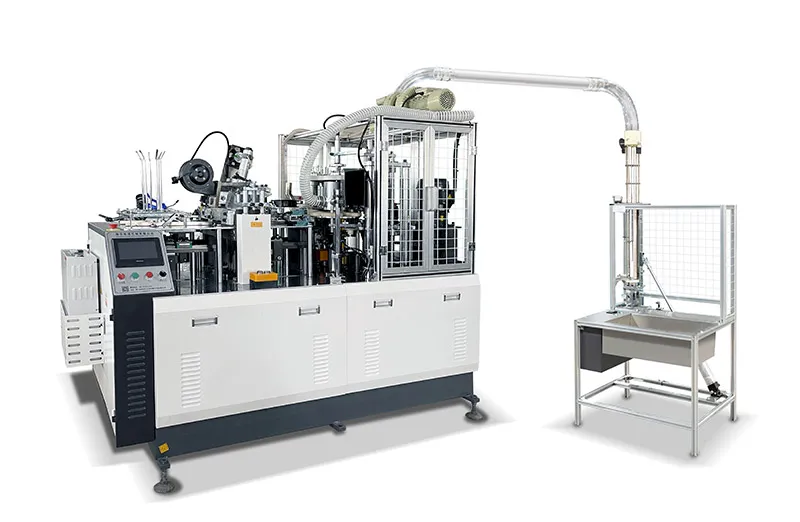
Considerations for Technical Buyers
When evaluating packaging machinery for an integrated line, several factors deserve careful attention.
Compatibility with Existing Equipment: Not all forming machines can be easily linked to a packaging unit. Check if the forming machine outputs cups in a consistent orientation and at a speed that matches the packaging machine’s intake. Some suppliers offer high-speed paper cup machines specifically designed for line integration.
Film Handling Versatility: Paper cup packaging uses various films (polyethylene, biodegradable, printed rolls). The packaging machinery must handle a range of film widths, thicknesses, and sealability characteristics. Multi-station machines with independent film tension control are more forgiving.
Space and Layout: Integrated lines require careful floor planning. Some configurations are L-shaped or U-shaped to fit within existing footprints. Verify clearances for conveyors, film stands, and operator access. Ideally, request a layout drawing from the supplier before purchase.
Service and Support: Because integration involves mechanical, electrical, and software interconnection, single-source suppliers often reduce integration risk. Many manufacturers provide both cup forming and packing machinery with a unified control platform. Alternatively, ensure your system integrator has experience with both brands and can coordinate warranties.
Additionally, consider the availability of a packing machine that can be easily retrofitted to your existing line.
Industry Trends and Future Outlook
The packaging machinery segment for paper cups is moving rapidly toward full automation and data integration. We see three trends shaping the next five years.
Smart Factories: Production lines are increasingly connected via industrial IoT. Real-time dashboards display OEE, waste rates, and predictive maintenance alerts. Packaging machinery with open communication protocols (OPC UA, MQTT) will be easier to integrate into broader MES systems.
Sustainability Drives Innovation: As paper cups face regulatory pressure regarding plastic coatings, packaging machinery must adapt to new materials like water-based barriers or compostable films. Suppliers are developing sealing systems that can handle lower-temperature sealing films without sacrificing speed.
Modular Line Design: Rather than one custom line, manufacturers are opting for modular machines that can be added or removed as demand changes. A suite of products that includes forming, packing, palletizing, and inspection modules allows for incremental investment. This approach reduces capital risk and enables phased expansion.
These trends suggest that packaging machinery will continue to evolve from a simple end-of-line add-on to a core component of production strategy. Technical buyers should prioritize flexibility and connectivity when making purchasing decisions. Exploring a range of products from various vendors can help identify the best modular fit.
Frequently Asked Questions
What is the difference between standalone and integrated packaging machinery?
Standalone packaging machines operate independently, requiring manual transfer of cups from the forming machine. Integrated lines link the forming and packaging units via conveyor, with synchronized controls, reducing labor and handling.
Can existing paper cup machines be retrofitted with integrated packaging?
Yes, many medium-speed and high-speed cup machines can be retrofitted with a compatible packaging unit. However, retrofitting may require modifications to the cup ejection and conveyor system. Consult the original equipment manufacturer or an experienced integrator for a feasibility assessment.
What is the typical payback period for an integrated packaging line?
Payback varies by volume and labor cost. For a line producing 1 million cups per month, labor savings alone can yield payback within 12–18 months. Additional savings from reduced waste and higher throughput shorten this period further. A detailed cost analysis based on your specific labor rates and production volume is recommended.
What film types are compatible with automatic paper cup packaging machines?
Most machines handle PE, PP, PET, and biodegradable films. Check the machine’s sealing temperature range and film thickness specifications. Some suppliers offer customized sealing jaws for specialized films. Always request a compatibility test with your intended film before purchase.
How do I choose between a vertical and horizontal packaging machine for cups?
Vertical machines are typically more compact and suited for high-speed pillow bag packaging. Horizontal machines offer better control for delicate products and can include multiple stations for labeling or gas flushing. The choice depends on cup size, packaging format, and line speed requirements. For example, horizontal form-fill-seal machines often provide more flexibility for different bag styles.
Conclusion
The shift from standalone to integrated packaging machinery represents a fundamental improvement in paper cup production efficiency. By combining forming and packaging into a synchronized line, manufacturers can achieve higher throughput, lower labor costs, and consistent quality. As technology advances toward smart, modular, and sustainable solutions, early-stage research into integrated lines will give technical buyers a competitive edge. Whether upgrading an existing facility or planning a greenfield project, understanding the capabilities and trade-offs of modern packaging machinery is essential for informed decision-making. The journey from standalone units to integrated systems is not merely a purchase—it is a strategic investment in the future of production efficiency.