

 English
 Pусский


Article Overview: Packaging machinery forms the final link in the production chain for paper cups, bowls, and similar disposable packaging. This guide explains how packaging machinery functions in real-world production environments, the tangible benefits it delivers, and the operational considerations that determine where the line stops—from delivery and installation to maintenance and changeover. Written for CTOs, engineering managers, and technical buyers, this article focuses on practical understanding without brand promotion. For a broader view of the production systems that pair with these machines, visit the packaging equipment homepage.
What Is Packaging Machinery in the Context of Paper Cup and Bowl Production?

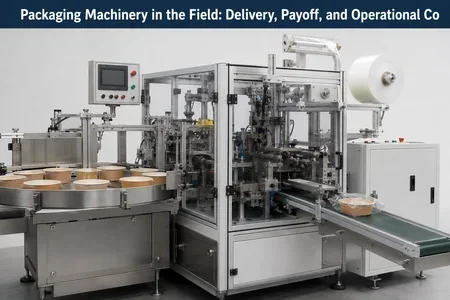
Packaging machinery for paper cups and bowls encompasses a range of automated systems that handle the final steps: forming, stacking, counting, wrapping, and sealing. These machines integrate with upstream cup or bowl formers—such as paper cup forming machines or paper bowl forming machines—to create a continuous production line. Common types include vertical packaging machines, horizontal packaging machines, and specialized systems for sleeving or labeling.
For example, a fully automatic vertical packaging machine integrates wrapping and labeling into one unit. It takes formed cups from the cup machine, groups them, wraps them in film, and applies a label—all in a single cycle. Horizontal packaging machines, often with multiple stations, offer separate controls for film feeding, sealing, and cutting, providing flexibility for different pack sizes and formats. The choice between vertical and horizontal designs depends on line layout, pack style, and production volume.
How Does Packaging Machinery Deliver Real-World Payoff?

The payoff from packaging machinery comes in several quantifiable areas:
- Speed and throughput – Modern packaging lines can handle up to several hundred cups per minute, depending on machine configuration and film type. For instance, high-speed cup forming and packaging systems can sustain output while maintaining seal integrity.
- Consistent quality – Automated sealing and labeling eliminate variability, reducing leakers and mislabeled packs. Servo-driven cutters and precise temperature controls ensure uniform seals across thousands of cycles.
- Labor efficiency – One operator can oversee multiple packaging machines, lowering direct labor costs per unit. In a typical mid-size facility, switching from manual packing to an automatic vertical machine can reduce labor requirements by 60–70%.
- Material savings – Precise film tension and servo-driven cutters minimize film waste, a significant cost factor in high-volume production. Many machines also allow use of thinner films without compromising seal strength.
These benefits are not theoretical. In a hypothetical mid-size paper cup production facility, switching from manual packing to an automatic vertical packaging machine can reduce labor requirements by 60–70% while improving pack consistency. The machine's ability to handle multiple cup sizes with quick changeovers also reduces downtime between product runs, a critical factor for producers serving diverse customers.
What Factors Determine Where the Line Stops?
Even the best packaging machine will fail to deliver if it cannot be integrated smoothly into the existing line or maintained during operation. The phrase “where the line stops” refers to the points in the production flow where bottlenecks or failures occur. Common stop points include:
- Feeding and indexing – If the upstream cup machine cannot supply cups at the packaging machine's speed, the line will stall. Matching throughput rates is essential. A compatible medium-speed cup machine may be ideal for balancing line speeds.
- Film handling – Wrinkled film, improper tension, or poor seal temperature can cause jams or weak seals, requiring operator intervention. The quality of the packaging system's film feed mechanism directly affects uptime.
- Changeover – Switching from one cup size or pack count to another can take 15–30 minutes on older machines. Servo-driven machines with recipe storage reduce this to under 5 minutes.
- Maintenance intervals – Machines with automatic lubrication systems extend service intervals and reduce unplanned stops. Regular maintenance on sealing jaws, cutters, and conveyor belts is critical for long-term reliability.
Delivery logistics also matter: packaging machinery is heavy, often requiring reinforced flooring or conveyor integration. Early-stage buyers should plan for site preparation, electrical requirements, and compressed air connections. Many suppliers offer on-site commissioning and operator training as part of the purchase, which can dramatically shorten the ramp-up period.
Key Factors When Selecting Packaging Machinery for Your Line
When evaluating packaging machinery for paper cup or bowl production, consider these criteria:
- Speed vs. flexibility – High-speed dedicated machines are cost-effective for long runs; multi-format machines suit varied product lines.
- Film compatibility – Ensure the machine can handle the seal temperature range for your chosen film (polypropylene, polylactic acid, etc.).
- Footprint – Vertical machines typically occupy less floor space than horizontal equivalents, a key factor for cramped facilities.
- Servo vs. pneumatic – Servo drives offer precise control, lower energy consumption, and quieter operation, but come at a higher initial cost.
- Certifications – For food-contact packaging, machines should meet relevant hygiene standards (e.g., CE, FDA compliance for film contact surfaces).
- After-sales support – Availability of spare parts, remote diagnostics, and local service technicians can make or break long-term uptime. For integrated line solutions, consult the production line homepage for additional resources.
Comparison: Vertical vs. Horizontal Packaging Machines
| Vertical Packaging Machine | Horizontal Packaging Machine |
|---|---|
| Forms pouch from roll of film around product | Uses pre-made pouches or wraps film around product |
| Often used for flow-wrapping individual cups | Often used for multi-pack bundles or sleeving |
| Smaller footprint; suitable for tight spaces | Larger footprint; allows multiple stations for different operations |
| Typical speed: 80–200 packs per minute | Typical speed: 40–120 packs per minute (varies by format) |
| Film tension controlled by servo; less waste | Film feeding and sealing can be servo or pneumatic; flexibility for varied pack sizes |
| Changeover time: 5–15 minutes | Changeover time: 10–20 minutes (with recipe storage) |
Frequently Asked Questions
What is the typical lifespan of a packaging machine for paper cups?
With regular maintenance, a well-built packaging machine can operate for 10–15 years. Key wear items include sealing jaws, film cutters, and conveyor belts, which can be replaced.
How long does installation and commissioning take?
Installation typically takes 3–5 days for a single machine, including electrical hookup and alignment. Full commissioning with training can take one to two weeks, depending on line complexity.
Can packaging machinery handle biodegradable films?
Yes, but seal temperature and pressure may need adjustment. Biodegradable films often require lower temperature settings. It is important to validate with your film supplier and machine manufacturer.
What is the difference between vertical and horizontal packaging machines?
Vertical machines form a pouch around the product from a roll of film, ideal for flow-wrapping cups. Horizontal machines use pre-made pouches or wrap around the product, often used for multi-pack bundles. The choice depends on pack style and line layout.
How do I integrate a packaging machine with existing cup formers?
Integration requires matching speed and indexing between machines. Many suppliers offer complete line solutions, including automated double-wall cup machines that pair with packaging equipment. Consult with the manufacturer for compatibility.
Conclusion
Packaging machinery is more than just the final station on a production line; it is a critical determinant of overall efficiency, product quality, and operational cost. Understanding how these machines deliver payoff—through speed, consistency, and labor savings—helps technical buyers make informed decisions. Equally important is recognizing where the line can stop: integration challenges, changeover delays, and maintenance needs must be anticipated early. By focusing on practical evidence and real-world implementation considerations, manufacturers can select packaging machinery that maximizes uptime and return on investment.