

 English
 Pусский


Article Overview: This guide provides a structured comparison of paper cup forming machine types, focusing on speed, automation, and material compatibility. It helps procurement teams, CTOs, and technical architects evaluate trade-offs and select equipment that aligns with production volume, budget, and operational constraints.
What Are the Key Differences Between Paper Cup Forming Machine Types?
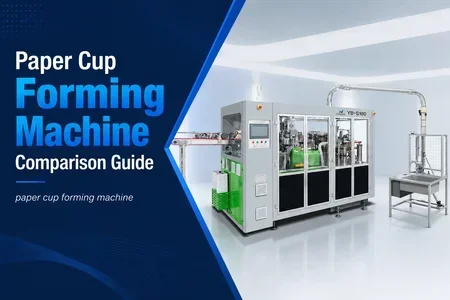
Paper cup forming machines vary by speed, output size range, and product configuration (single wall, double wall, or cup with handle). Understanding these distinctions is the first step in narrowing your options. Below we compare the most common categories: medium-speed vs. high-speed, and standard vs. double-wall/handle forming machines.
Medium-Speed vs. High-Speed Paper Cup Forming Machine
Option A: Medium-Speed (80–130 cups/min)
Typically used for small to medium batch runs, offering greater flexibility in cup size changeovers. The medium-speed paper cup forming machine often features servo-driven feeding and PLC control, with stable output around 100 cups/min for common cup sizes. It suits companies that produce a range of cup volumes (e.g., 4 oz to 12 oz) and need to switch products frequently.
Option B: High-Speed (130–200+ cups/min)
Designed for dedicated, high-volume lines, the high-speed paper cup forming machine uses robust steel plate bodies and oil-drain lubrication for continuous operation. It delivers maximum throughput for a single cup size (e.g., 8 oz or 12 oz) and minimizes per-unit labor cost. However, changeovers take longer and require more technical skill.
Buyer note: If your daily output is below 100,000 cups, a medium-speed machine often yields better ROI due to lower capital cost and faster changeovers. For outputs exceeding 200,000 cups per day, a high-speed line becomes economically justified.
Single-Wall vs. Double-Wall vs. Handle-Forming Machines
Option A: Single-Wall Paper Cup Forming Machine
The standard configuration for disposable hot/cold cups. Uses a single layer of PE-coated paper. Ideal for commodity cups (coffee, water, vending). Lowest material cost per cup.
Option B: Double-Wall Paper Cup Forming Machine
Produces insulated cups with two paper layers separated by an air gap. Typically runs at lower speed (e.g., 40–60 cups/min for medium-speed double-wall machines). Requires additional ultrasonic welding or glue application for the outer layer.
Option C: Paper Cup with Handle Forming Machine
Integrates handle cutting, ultrasonic bonding, and forming in one system. The handle attachment adds complexity and reduces speed (e.g., 30–50 cups/min). Best for specialty takeaway cups where branding and heat protection are priorities.
Buyer note: If your market is standard disposable cups, single-wall is the most efficient. For premium coffee chains, double-wall or handle machines may justify the higher equipment investment through product differentiation.
How to Evaluate Technical Specifications for a Paper Cup Forming Machine?
When comparing models, focus on specifications that directly affect production efficiency, quality, and maintenance. Use the following evaluation workflow to assess candidate machines.
Step 1: Define Output Volume and Cup Size Range
Calculate your daily required output and the cup sizes you need to produce. Machines are optimized for a specific diameter range (e.g., 50–100 mm). Check the mold changeover time and whether quick-change tooling is available. For example, medium-speed models often handle a wider size range without sacrificing stability.
Step 2: Assess Material and Coating Compatibility
Most paper cup forming machines work with single or double PE-coated paper (200–350 gsm). Ensure the machine’s heating system (hot air or infrared) can achieve the required seal temperature (typically 180–220°C). Some high-speed models may have tighter tolerances for paper thickness variation.
Step 3: Check Automation and Control Features
Key automation features include automatic paper feeding, photoelectric fault detection, programmable logic controllers (PLC), and cup counting/collecting. Higher automation reduces labor but increases upfront cost. Evaluate whether the control system supports remote diagnostics or integration with your ERP.
Step 4: Review Floor Space, Power, and Maintenance Requirements
Check the machine’s footprint, power consumption (kW), and compressed air needs. Also investigate lubrication systems: automatic lubrication reduces downtime, while manual oiling may be acceptable for small lines. Request the mean time between failures (MTBF) data from the manufacturer.
The following table provides a side-by-side comparison of key specifications for medium-speed and high-speed paper cup forming machines:
| Specification | Medium-Speed Machine | High-Speed Machine |
|---|---|---|
| Output Speed (cups/min) | 80–130 | 130–200+ |
| Cup Diameter Range | 50–100 mm | 50–80 mm (narrower) |
| Automation Features | PLC, servo feed, auto fault stop | PLC, servo, auto lubrication, remote diagnostic ready |
| Power Consumption | 8–12 kW | 15–25 kW |
| Changeover Time | 15–30 minutes | 45–90 minutes |
| Typical Price Range (USD) | $30,000 – $60,000 | $80,000 – $150,000+ |
Use this table as a quick reference when comparing multiple machine models. Always request the manufacturer’s datasheet for exact values, as specifications vary between brands.
What Trade-Offs Exist Between Speed and Flexibility?
Selecting a paper cup forming machine often involves balancing throughput against operational flexibility. Below we examine two common procurement scenarios.
Dedicated High-Speed Line vs. Multi-Purpose Medium-Speed Line
Option A: Dedicated High-Speed Line
Invest in one high-speed machine for a single cup size (e.g., 8 oz) that runs 24/7. Lower per-unit cost but higher risk if demand drops. Requires spare parts inventory and skilled technicians.
Option B: Multi-Purpose Medium-Speed Line
Deploy two medium-speed machines that can handle multiple cup sizes and be repurposed for double-wall or handle cups. Higher per-unit cost but greater resilience to market shifts. Easier to train operators and maintain.
Buyer note: Consider your product mix stability. If you serve multiple clients with different cup designs, medium-speed flexibility often outweighs the speed advantage of a dedicated line.
Additional cost factors to include in TCO analysis:
- Initial purchase price and installation
- Tooling and mold costs for each cup size
- Energy consumption per 1,000 cups
- Labor cost per shift and training hours
- Maintenance frequency and spare parts availability
- Resale value after 5 years
Procurement Checklist for Paper Cup Forming Machine Buyers
Use this checklist when evaluating vendors and preparing your purchase decision.
- Verify output requirements: Confirm stable speed for your target cup size using the actual paper stock you plan to use.
- Request a sample run: Ask the supplier to produce cups from your material and inspect seal quality, edge trimming, and dimensional consistency.
- Compare automation levels: Decide which features (auto-feed, fault stop, cup counting) are essential vs. nice-to-have.
- Assess after-sales support: Check warranty terms, availability of technicians, and lead time for spare parts. Ideally choose a manufacturer with a local service partner.
- Evaluate total cost: Obtain a quote that includes installation, training, and one year of maintenance. Compare energy efficiency data from multiple vendors.
- Plan for future needs: Ensure the machine can be upgraded for larger cup sizes or additional product types (e.g., bowl conversion).
FAQ
What is the typical price range for a paper cup forming machine?
Prices vary widely by speed, automation, and configuration. A medium-speed model (80–130 cups/min) may range from $30,000 to $60,000, while high-speed automated lines can exceed $120,000. Bowl and double-wall machines often cost 20–30% more than equivalent single-wall machines.
How do I choose between a medium-speed and a high-speed paper cup forming machine?
Base your decision on daily production volume and product variety. If you produce over 200,000 cups per day of a single size, high-speed is cost-effective. For lower volumes or frequent size changes, medium-speed offers better flexibility and lower initial investment.
What maintenance is required for a paper cup forming machine?
Regular maintenance includes cleaning the heating surfaces, lubricating moving parts (automatic oiling systems reduce this), replacing seals, and calibrating sensors. High-speed machines typically require more frequent preventive maintenance. Always follow the manufacturer's schedule.
Can the same machine produce paper cups and paper bowls?
Some medium-speed models have interchangeable molds for cup and bowl forming, but bowl machines usually need a larger diameter range and different heating system. For higher bowl volumes, dedicated bowl forming machines are more efficient. Refer to product-specific pages for details.
Conclusion
Selecting a paper cup forming machine requires a clear understanding of your production volume, product mix, and long-term strategy. By comparing medium-speed and high-speed machines, evaluating automation features, and reviewing the side-by-side specification table, procurement teams can make an informed decision. Always request a trial run with your own paper and inspect support infrastructure before purchase. Focus on alignment with your operational constraints rather than chasing maximum speed. For further details, explore the paper cup machine overview and the high-speed paper cup machine page for deeper comparison.