


Aug 29, 2025
Author: Site Editor


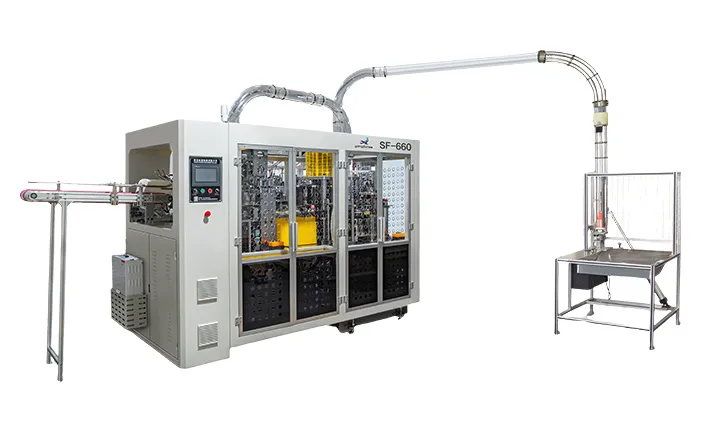
For paper cup manufacturers, "higher output" and "lower costs" often feel conflicting. But a well-designed Paper Cup Machine solves this through smart features. Below is how it achieves the balance.
Continuous auto workflows: Covers paper feeding, forming, sealing, and trimming—no manual steps in between, avoiding efficiency gaps from handoff delays.
Less labor needed: Reduces reliance on operators, eliminating issues like fatigue-related slowdowns or human errors that require rework.
Stable speed, no extra cost: Maintains steady high output (vs. semi-manual machines that fluctuate with labor availability) without raising monthly labor expenses.
Full paper utilization: Refined feeding systems and precise molds align paper sheets perfectly with cup shapes, minimizing leftover scraps.
No speed sacrifice: Material optimization is built into the machine’s core workflow—no need to slow down to reduce waste.
Direct cost cut: Less waste means lower spending on paper (which typically makes up 60-70% of total production costs for paper cups).
Adaptable to paper types: Works with different grammages of paper without increasing waste, fitting diverse product needs.
Long-lasting parts: Key components (gears, molds, sealing heads) use high-strength wear-resistant alloys, resisting daily friction and pressure.
Fewer stops: Durable parts reduce unplanned maintenance—no frequent pauses to replace worn components that disrupt production.
Lower long-term costs: Less need to stock or replace vulnerable parts, cutting both replacement part expenses and technician service fees.
Corrosion resistance: Alloy parts are coated to resist moisture (from paper or cleaning), extending their lifespan in factory environments.
Real-time tracking: PLC and IoT tools monitor temperature, speed, and fault risks (like uneven sealing) 24/7, catching issues early.
Early warnings + remote fixes: Alerts are sent to technicians instantly, and many minor faults can be diagnosed/resolved remotely—no waiting for on-site visits.
Steady production: Fewer unplanned stops keep efficiency on track, preventing losses from missed order deadlines or rushed overtime.
Data-driven optimization: Generates simple reports on output and downtime, helping factories adjust schedules to boost overall efficiency.
Efficient motor systems: Uses servo motors that adjust power based on workload (e.g., lower power during mold changes, full power during steady production).
Heat recovery: Sealing and heating components reuse excess heat, reducing energy needed to reach operating temperatures.
No output tradeoff: Energy-saving features don’t slow down production—machines keep up with target output while using 15-20% less electricity than older models.
Long-term savings: Lower monthly power bills add up, especially for factories running 2-3 shifts daily.
A Paper Cup Machine balances efficiency and cost not by compromise, but by auto workflows, material optimization, durable parts, smart monitoring, and energy-saving design.
If you want to see equipment that turns these features into real business value, visit Yongbo Machinery’s product page. It has models for different production scales—from small batch plants to large factories—helping you match efficiency goals with cost budgets.


 English
 Pусский


