

 English
 Pусский


Article Overview: This guide explains the fundamentals of paper cup forming machine technology — from the raw material roll to a finished, ready-to-use paper cup. Designed for procurement teams, plant managers, and entrepreneurs investigating disposable packaging solutions, you will learn how these machines operate, the types available, the key factors to evaluate before purchasing, and the material considerations that influence performance. By the end, you will have a structured understanding of what a paper cup forming machine can do and how to assess one for your specific production needs.
What Is a Paper Cup Forming Machine?
A paper cup forming machine is an automated manufacturing system that converts pre-printed or plain paper roll stock into fully formed paper cups. The machine integrates several mechanical and thermal processes — feeding, sidewall sealing, bottom punching, bottom sealing, rim curling, and ejection — into a single, continuous production line. Depending on the model, a single machine can produce anywhere from 40 to over 180 cups per minute.
These machines are the backbone of the disposable food and beverage packaging industry. They produce cups for hot drinks (coffee, tea), cold beverages, ice cream, and even portion containers for sauces. The output ranges from small 4 oz espresso cups to large 22 oz soda cups, and speciality designs like double-wall insulated cups for heat-sensitive drinks. The typical raw material is paper board with a polyethylene (PE) or polylactic acid (PLA) coating on one or both sides, which provides liquid resistance and enables heat sealing.
How Does a Paper Cup Forming Machine Work?
Understanding the sequence of operations inside a paper cup forming machine is crucial for technical evaluation and troubleshooting. While exact steps vary by design, the standard process follows these stages.
Stage 1: Sidewall Forming and Sealing
Step 1 – Paper Feeding: A roll of coated paper is mounted on an unwinding station. The paper is pulled through tension guides to ensure consistent alignment. In some setups, an in-line flexographic printer adds simple branding or fill lines before forming.
Step 2 – Blank Cutting: The paper is cut into individual fan-shaped blanks. The precise shape is determined by the cup's top and bottom diameters and sidewall height.
Step 3 – Side Seaming: The blank is wrapped around a tapered mandrel. A heated sealing bar applies pressure along the vertical overlap, melting the PE or PLA coating to fuse the sidewall into a cone. Ultrasonic sealing is used in some advanced models for certain material types.
Stage 2: Bottom Attachment and Finishing
Step 4 – Bottom Punching: A separate paper roll (or the same roll but of a different grade) feeds a bottom-punching die that cuts circular discs. These discs will become the cup base.
Step 5 – Bottom Sealing: The die positions the bottom disc into the already-formed sidewall. Heated jaws crimp and press the bottom edge of the sidewall over the disc, fusing the PE/PLA layers to create a leak-proof seal.
Step 6 – Top Rim Curling: A rotating curling tool rolls the top edge of the cup outward to form a smooth, rigid rim. This step also applies a bead of hot melt adhesive if a rolled rim with a reinforcing ring is required.
Step 7 – Cup Ejection: Finished cups are ejected via compressed air or a mechanical pusher onto a conveyor belt. They typically pass through a counting sensor and might be pre-stacked or dropped directly into a packaging machine for shrink wrapping.
The entire cycle is continuously repeated. Modern paper cup forming machines use servo motors and PLC controls to coordinate these movements with high precision, allowing rapid size changeovers (sometimes under 30 minutes) and real-time fault detection.
What Types of Paper Cup Forming Machines Exist?
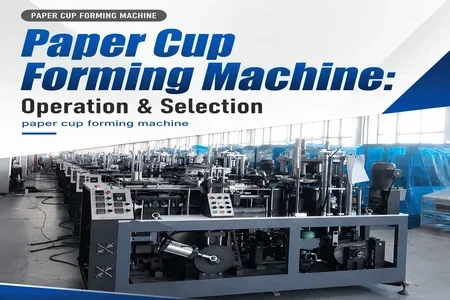
Manufacturers classify paper cup forming machines primarily by production speed, degree of automation, and cup type. Choosing the right category depends on your target market and budget.
- Medium-Speed Paper Cup Forming Machines: 40–70 cups per minute. Often semi-automated with manual bottom feeding or simpler unwinding. Suitable for startups, regional dairies, or businesses producing small batches of customised cups.
- High-Speed Paper Cup Forming Machines: 70–180 cups per minute. Fully automated with multi-station turrets, servo-driven indexing, and integrated quality control. Designed for 24/7 production in large-scale High Speed Paper Cup Machine environments.
- Double-Wall Paper Cup Forming Machines: These produce cups with an insulating outer layer. They add a second sidewall blank that is glued or embossed to the inner cup, creating an air gap. Often used for premium coffee shops. Some machines are dedicated double-wall formers, while others offer modular double-wall attachments for existing single-wall lines.
- Smart / Low-Automation Machines: Entry-level units where operators manually load blanks or collect cups. They have lower output (20–40 ppm) but minimal capital cost, used for on-demand prototyping or very low volume production.
In addition, machines can be horizontal or vertical layout. Horizontal machines typically have a smaller footprint and easier paper roll changes, while vertical machines may offer higher speed due to gravity-assisted feeding. The choice often comes down to factory floor space and operator preference.
What Factors Should You Consider When Selecting a Paper Cup Forming Machine?
Purchasing a paper cup forming machine is a significant investment. Evaluating these factors systematically helps avoid underperformance or production gaps.
- Production Volume and Speed: Calculate your daily target output and select a machine whose maximum rated speed exceeds that by at least 15% to accommodate fluctuations and maintenance downtime.
- Cup Size Range and Changeover Time: Check the machine’s mandrel and die set compatibility. A machine that handles 4 oz to 16 oz with quick size change (e.g., under 20 minutes) gives flexibility. Some machines require separate forming anvils per size, which adds to tooling cost.
- Material Compatibility: Verify the machine can seal the coating types you plan to use. PE-coated paper requires lower sealing temperatures than PLA; double-wall paper may need specialized gluing units. If you intend to run biodegradable PLA or aqueous-coated paper, confirm heater and cooling settings are adjustable.
- Automation Level and Workforce: Fully automatic lines reduce labour but require skilled technicians for maintenance. Semi-automatic machines demand more operators but are easier to repair. Consider local labour costs and skill availability.
- Energy Consumption and Utility Requirements: High-speed machines may need 380V three-phase power and compressed air (6–8 bar). Assess your facility’s electrical infrastructure. Energy-efficient servo drives can lower operating costs over time.
- Footprint and Plant Layout: Measure the machine’s dimensions including unwinding stands and conveyor outfeed. Leave space for paper roll storage and maintenance access. Horizontal models generally have a longer but narrower footprint.
- After-Sales Support and Spare Parts: A paper cup forming machine has consumable parts: sealing jaws, heating elements, cutting blades. Investigate the availability and lead time of spares in your region. Training and remote diagnostic support can drastically reduce downtime.
Creating a weighted decision matrix with these criteria can objectively compare different suppliers. Always request a demonstration run with your intended paper stock and cup size to observe quality firsthand.
Material and Design Considerations in Paper Cup Production
The performance of a paper cup forming machine is inseparable from the material it processes. Paper board weight, coating thickness, and moisture content directly affect sealing strength and cup integrity.
Paper Board Selection: Most cups use 190–320 gsm paper board. Lighter boards (190–210 gsm) suit small cold-drink cups, while heavier boards (250–320 gsm) are required for hot cups or large sizes to prevent buckling. The paper must have high stiffness and smoothness to run reliably through the forming stations. Inconsistent caliper can cause mis-feeds or incomplete seals.
Coating Types: PE (polyethylene) is the most common coating; it offers excellent heat-seal strength and water resistance at low cost. However, environmental concerns drive interest in PLA (polylactic acid), a bio-based compostable coating. PLA seals at a narrower temperature window and may need modified heater profiles on the paper cup forming machine. New aqueous dispersion coatings are also emerging, which require different curing methods and may limit top speed.
Printing and Die-Cutting: Paper is typically printed before forming, either by the cup manufacturer or an external converter. Registration marks on the printed design guide the blank cutting to ensure the logo is centred. Some paper cup forming machines integrate in-line printing for simple one- or two-colour designs, but high-quality multi-colour graphics are best printed offline.
Design elements like a ribbed sidewall for rigidity or an extended bottom skirt for stability add complexity to the forming process. Such features may require custom tooling or an additional embossing station. If you plan to produce cups with handle attachments or other add-ons, you’ll need a machine that includes a handle-assembly module or interfaces with separate handle-applicating equipment.
FAQ
What is the typical lifespan of a paper cup forming machine?
With proper maintenance, a well-built paper cup forming machine can operate for 15–20 years. High-wear components such as sealing jaws and bearings may need replacement every 1–3 years depending on usage intensity. A documented preventive maintenance schedule is essential to reach maximum service life.
Can a single paper cup forming machine produce multiple cup sizes?
Yes, most machines support a range of sizes by swapping mandrels, top crimpers, and bottom dies. A typical range might cover 2.5 oz to 12 oz, or 8 oz to 22 oz. Size changeover time varies from 15 minutes to over an hour. Some high-end machines store multiple program recipes and guide the operator through tool changes with step-by-step prompts.
How often does a paper cup forming machine need maintenance?
Routine maintenance includes daily cleaning of paper dust and coating residue, weekly lubrication of cam followers and chains, and monthly inspection of electrical connections and heater elements. Sealing stations should be checked for temperature calibration at least quarterly. A major overhaul, including replacement of major components, is typically scheduled every 5–7 years based on operating hours.
What is the difference between PE and PLA coated paper for cup forming?
PE-coated paper seals at around 120–150°C and is forgiving of temperature fluctuations, making it easier for high-speed machines. PLA begins to seal near 90°C and has a narrower process window — too much heat causes warping; too little leads to weak seams. PLA also has lower hot tack strength, so the forming machine’s bottom sealing station may need slower indexing or specialized cooling. Despite these challenges, PLA is chosen for its compostability in industrial facilities.
Is prior experience required to operate a paper cup forming machine?
Modern machines with touchscreen HMI and recipe management can be operated by staff with minimal technical background after 2–3 days of training. However, troubleshooting mechanical faults and adjusting sealing parameters for new materials benefit from a technician with a background in packaging machinery. Many suppliers offer on-site commissioning and remote support to ease the learning curve.
Conclusion
Selecting a paper cup forming machine is a multidimensional decision that touches on technology, production planning, and material science. By dissecting the forming process into sidewall and bottom attachment stages, evaluating machine types against your output targets, and weighing critical selection criteria such as speed, size range, and material compatibility, you can narrow down options effectively. The shift toward sustainable coatings and the demand for versatile, quick-changeover equipment add layers that make thorough research essential. Use the concepts and checklists in this guide to frame your discussions with equipment suppliers and to built a production line that meets both current requirements and future market shifts.