
 English
 Pусский


Article Overview: This guide provides engineering and procurement professionals with a foundational understanding of packaging film used in automated paper cup and bowl packaging. It covers film types, critical properties, selection criteria, and quality considerations to support informed decision-making during early-stage research.
What Is Packaging Film and Why Does It Matter for Paper Cup Production?
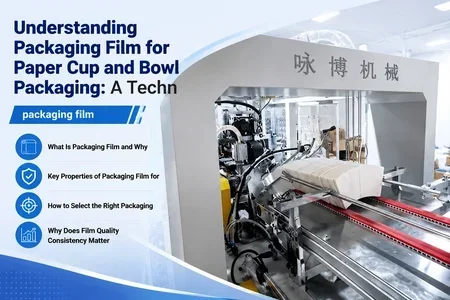
Packaging film is a thin, flexible plastic material used to wrap, seal, and protect finished paper cups and bowls during storage and transport. In the context of paper cup manufacturing, packaging film is applied by automatic packaging machines—such as the Automatic Vertical Paper Cup Packaging Machine—to create sealed bundles or individual packages. The choice of film directly affects packaging speed, seal integrity, shelf appeal, and overall production efficiency. For engineering managers and technical buyers, understanding the nuances of packaging film is essential to aligning material specifications with machine capabilities and end-product requirements.
Without the right film, even the most advanced high-speed paper cup machine can suffer from jams, weak seals, or inconsistent packaging. Conversely, selecting an appropriate film can reduce downtime, improve throughput, and lower material costs. This article builds the technical background needed to evaluate film options without relying on vendor claims.
Key Properties of Packaging Film for Automated Machinery
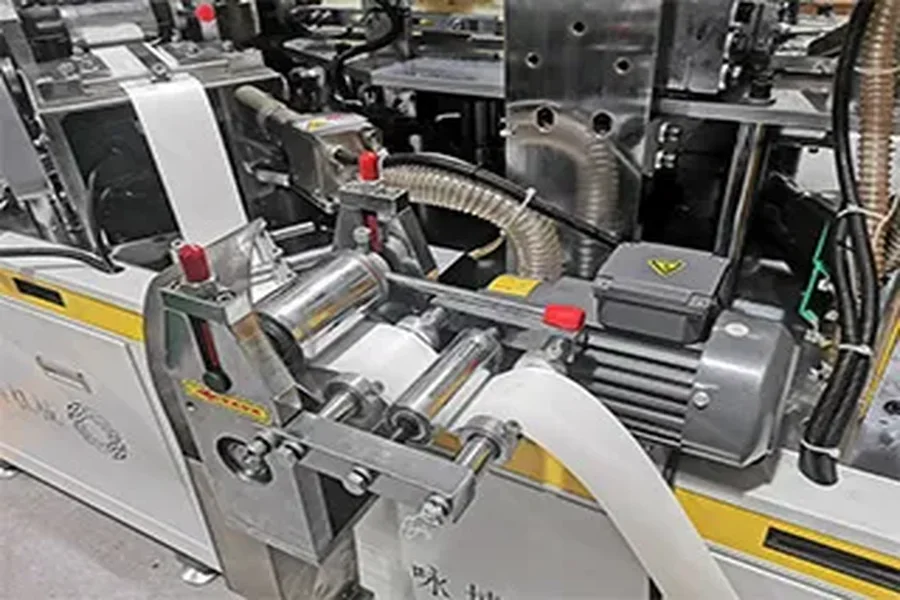
When assessing packaging film for use with automatic horizontal or vertical packaging machines, several physical and mechanical properties demand attention. The following list outlines the most critical parameters:
- Sealing temperature range: The temperature window within which the film forms a strong, consistent seal. Machines like the Horizontal Packaging Machine (Fourstations) require films with a broad sealing range to accommodate speed variations.
- Tensile strength and elongation: Determines how well the film withstands tension during unwinding and forming. Films with low tensile strength may tear, causing line stoppages.
- Thickness (gauge): Typically measured in microns. Thicker films offer better puncture resistance but may reduce the number of units per roll, affecting changeover frequency.
- Optical clarity: Important for retail packaging where product visibility is valued. For bulk packaging, clarity may be secondary.
- Slip coefficient: Affects how easily the film moves over machine rollers. Films with too high friction can cause drag and misalignment.
- Barrier properties: Moisture and oxygen transmission rates matter if the cups require extended shelf life or protection from humidity.
Each property interacts with machine settings. For example, a film with a narrow sealing range may require precise temperature control, which not all machines offer. Engineering teams should request technical datasheets and, when possible, conduct trial runs on their specific paper cup machine model.
How to Select the Right Packaging Film for Your Line
Selection begins with defining the packaging objective: are you creating individual wraps, multi-pack bundles, or tray packs? The machine configuration—vertical form-fill-seal (VFFS) or horizontal form-fill-seal (HFFS)—also dictates film requirements. For instance, VFFS machines typically use a single roll of film to form both the bag and the seal, while HFFS machines, such as the YB-520B, operate with multiple film webs for higher output.
Consider these evaluation steps:
- Align film specifications with your medium-speed paper cup machine or high-speed line’s operating parameters (temperature, pressure, speed).
- Verify the film’s compatibility with the machine’s sealing mechanism—hot bar, impulse, or ultrasonic.
- Assess the film’s roll dimensions (width, diameter, core size) to match the machine’s film unwind system.
- Test for anti-static properties if the production environment has low humidity.
For operations leaders overseeing multiple lines, standardizing on one or two film types across all double wall paper cup machine lines can simplify inventory management and reduce training requirements. However, this trade-off must be balanced against each line’s specific speed and seal requirements.
Why Does Film Quality Consistency Matter in High-Volume Production?
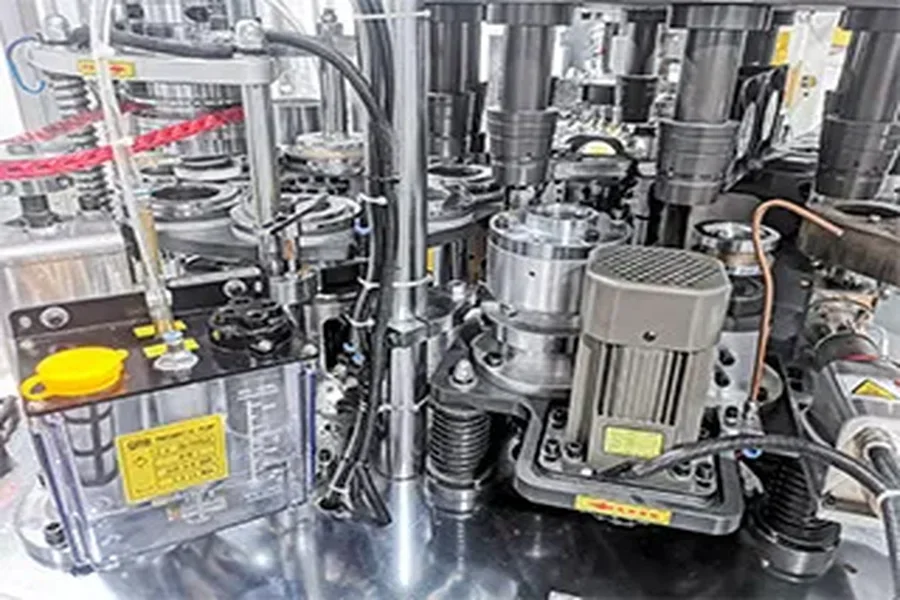
In high-volume production, even small deviations in film thickness or seal strength can accumulate into significant waste. Films from different production batches may exhibit variations in gauge or additive distribution. This inconsistency forces machine operators to constantly adjust sealing temperature and pressure, reducing overall equipment effectiveness (OEE). Quality assurance protocols should include receiving inspection for key parameters—at least thickness and seal initiation temperature—before the film enters the production floor.
A reliable supplier will provide certificates of analysis and maintain narrow manufacturing tolerances. When evaluating potential suppliers, request documentation of their quality control processes. Many manufacturers of packing machine systems, including Yongbo, offer guidance on acceptable film specifications for their equipment.
Common Packaging Film Types and Their Applications
While many films exist, the following types are most prevalent in paper cup and bowl packaging:
- Polyethylene (PE) film: Widely used for its low cost and good sealing properties. Common in shrink wrap and over-wrap applications.
- Polypropylene (PP) film: Offers higher clarity and stiffness, often used for retail-ready packages. Requires higher sealing temperature.
- Laminated films: Combine multiple layers (e.g., PE + PET) to achieve better barrier and puncture resistance. Used for premium or export packaging.
- Biodegradable films: Growing interest from brands seeking sustainable packaging. However, these films may have different sealing characteristics and lower tensile strength, requiring machine adjustments.
Each film type interacts differently with machine components. For example, laminated films may require more precise temperature control to avoid delamination. It is advisable to consult the machine manufacturer—such as Yongbo Machinery—for a list of validated film suppliers before committing to a specific material.
FAQ
What is the most common packaging film used in paper cup packaging?
Polyethylene (PE) film is the most common due to its balance of cost, sealability, and availability. Many automatic packaging machines are configured for PE film by default.
Can I use the same film on a vertical and a horizontal packaging machine?
Not necessarily. Horizontal machines often require films with higher slip and flexibility because of the multi-station forming process. Vertical machines typically accept a wider range of films but may be more sensitive to thickness variations.
How do I ensure film consistency from different suppliers?
Establish a quality checklist that includes thickness, seal initiation temperature, and tensile strength. Require each supplier to provide a certificate of analysis with each shipment. Conduct periodic audits of your own inventory.
Does film selection affect machine maintenance?
Yes. Films with high levels of slip additives can leave residue on rollers and sealing bars, increasing cleaning frequency. Conversely, films with low slip may cause excessive wear on film guides. Matching film to machine design helps minimize maintenance.
Conclusion
Packaging film is a critical consumable in paper cup and bowl production, directly influencing line efficiency, package quality, and total cost of ownership. By understanding key film properties, selection criteria, and quality management practices, engineering and procurement teams can make informed decisions that align with their specific machine fleet and production goals. Early-stage research should prioritize gathering detailed specifications from both film suppliers and machine manufacturers. For further guidance on integrating packaging film with your existing equipment, explore the resources available at Yongbo Machinery.